
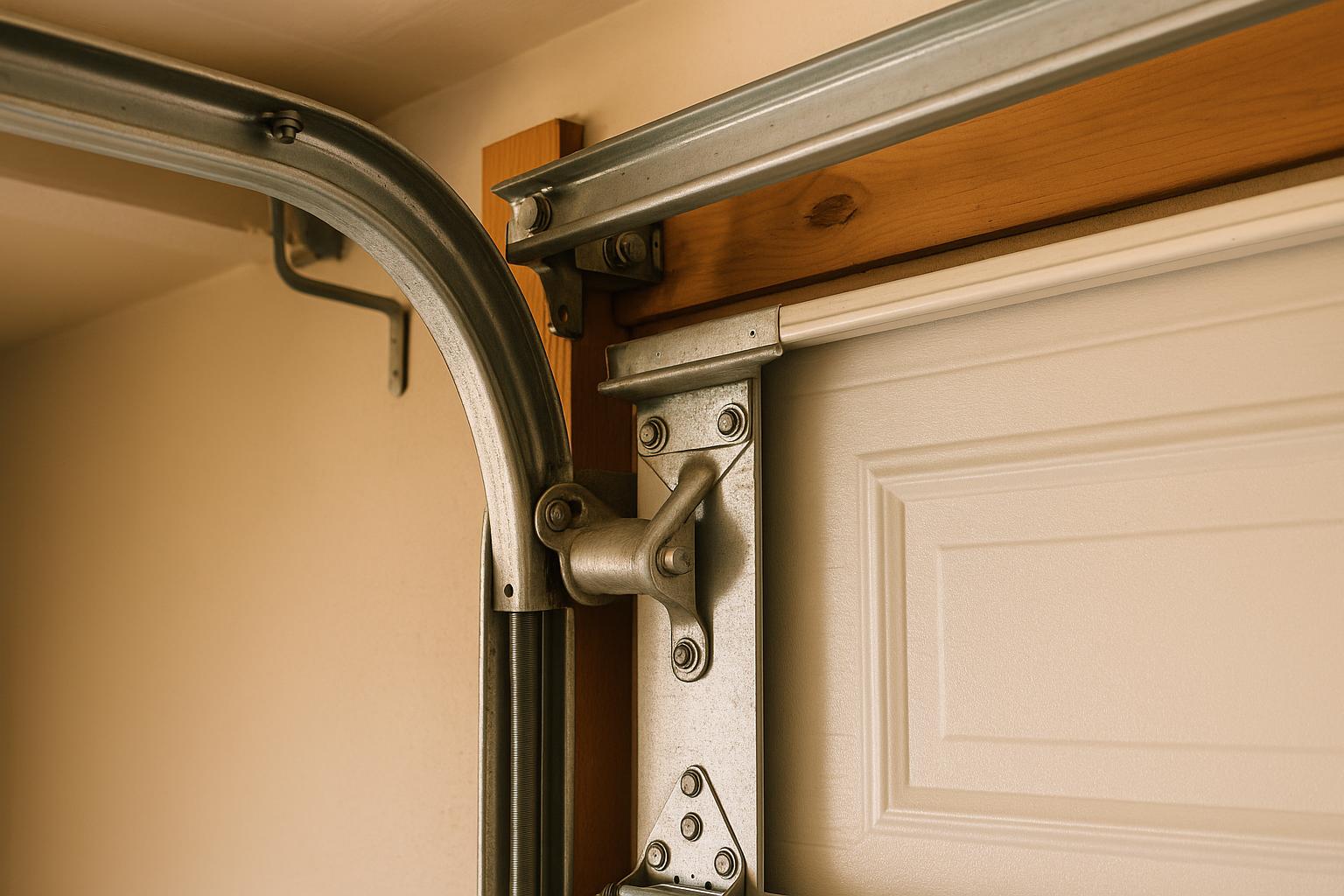
That Noise From Your Garage Door Isn't Normal
You press the button on your opener, and instead of the smooth hum you're used to, you hear grinding, squealing, rattling, or a loud bang. If your garage door has started making strange noises, you're not alone — it's one of the most common concerns we hear from homeowners here in Townsend. The good news is that most garage door noises point to identifiable, fixable problems. The bad news is that ignoring them usually makes things worse.
In this guide, we'll walk you through the most common garage door noises, what causes them, and what you can do about each one. Whether you're dealing with a minor annoyance or a sign of a serious mechanical issue, understanding the source of the sound is the first step toward getting it resolved.
Squealing or Screeching Sounds
A high-pitched squeal or screech when your garage door opens or closes is one of the most common complaints. This sound usually comes from one of two sources:
- Dry or worn rollers: Metal rollers running along the track without proper lubrication create friction, which produces that unmistakable screech. Over time, the rollers can also wear down, making the noise progressively louder.
- Lack of lubrication on hinges and bearings: Every moving part on your garage door system needs periodic lubrication. When hinges, bearings, or pivot points dry out, metal-on-metal contact creates noise and accelerates wear.
What you can do: Apply a garage door-specific lubricant (not WD-40, which is a solvent, not a long-term lubricant) to the rollers, hinges, and bearing plates. If you have metal rollers and they appear worn or chipped, consider upgrading to nylon rollers, which run much more quietly. If lubrication doesn't solve the problem, the rollers or hinges may need to be replaced entirely.
Grinding or Scraping Noises
A grinding or scraping sound often indicates a more serious issue than simple dryness. Common causes include:
- Misaligned tracks: If the vertical or horizontal tracks have shifted even slightly, the door's rollers can grind against the edges of the track as the door moves. This not only creates noise but can cause the door to get stuck or come off the track entirely.
- Bent or damaged track sections: Tracks can become dented or bent from impact — maybe a car bumped into one, or something fell against it. Even a small dent can cause the door to drag and grind.
- Worn-out gears in the opener: If the grinding seems to come from the ceiling-mounted opener unit rather than the door itself, the internal gears may be stripped or wearing out.
What you can do: Visually inspect the tracks for obvious bends, gaps, or misalignment. You can sometimes gently tap a minor dent back into shape with a rubber mallet, but significant track issues should be handled by a professional. If the noise is coming from the opener, it's best to have a technician inspect the gear assembly before it fails completely and leaves you stranded.
Rattling or Vibrating Sounds
Rattling is often the easiest noise to diagnose and fix. It typically means something is loose:
- Loose nuts, bolts, or screws: The constant vibration of daily operation can gradually loosen the hardware that holds your garage door system together. Hinges, track brackets, and opener mounting hardware are all common culprits.
- Loose chain on a chain-drive opener: If you have a chain-drive garage door opener, the chain can loosen over time, causing it to slap against the rail and create a rattling vibration throughout the garage.
What you can do: Grab a socket wrench and tighten all visible nuts and bolts on the door's hinges, track brackets, and the opener's mounting hardware. If you have a chain-drive opener, check the chain tension — it should have about a half-inch of play. Many homeowners in Townsend and Middletown who deal with rattling garage doors find that a simple tightening session solves the problem entirely.
Popping or Banging Sounds
A loud pop or bang when the door starts moving can be startling. This noise is often related to:
- Torsion spring issues: The torsion springs above your door are under extreme tension. When they start to wear or when the coils bind, they can release energy unevenly, creating a popping sound. A sudden, very loud bang when the door isn't in use could mean a spring has broken.
- Panel sections shifting: As the door transitions from vertical to horizontal movement along the curved section of the track, worn hinges or tight spots can cause the panels to jerk and pop.
What you can do: Spring-related issues should always be handled by a trained technician. Torsion springs are under enough tension to cause serious injury if mishandled. If you suspect your springs are the source of the noise, stop using the door and call a professional. For panel-related popping, lubricating the hinges and checking for obstructions in the track curve can sometimes help.
Humming or Buzzing Without Movement
If you press your garage door opener button and hear a hum or buzz but the door doesn't move, the motor is trying to run but something is preventing it from engaging:
- Stripped opener gears: The motor spins, but the stripped gears can't transfer that motion to the drive mechanism.
- Disconnected door: Check whether the emergency release cord has been pulled, disconnecting the door from the opener carriage.
- Locked door: Some garage doors have a manual lock that, when engaged, prevents the opener from moving the door.
What you can do: First, check the obvious — make sure the manual lock isn't engaged and that the emergency release hasn't been pulled. If both are fine and the motor just hums, the internal gears likely need to be replaced. This is a straightforward repair for a qualified garage door technician.
When to Call a Professional
Some garage door noises are easy DIY fixes — a little lubrication here, a tightened bolt there. But others point to problems that require professional tools, replacement parts, and expertise to resolve safely. As a general rule, you should call a garage door professional when:
- The noise involves the springs or cables
- The door is visibly off-track or sagging
- The opener motor runs but the door won't move
- You've tried basic maintenance and the noise persists
- The door feels significantly heavier than usual when operated manually
At Townsend Garage Door, we help homeowners across Townsend, Middletown, Smyrna, Odessa, and the surrounding area diagnose and fix noisy garage doors every week. Whether it's a simple roller replacement or a full opener gear rebuild, we show up on time, explain what's going on in plain language, and get your door running quietly again.
Keep Your Garage Door Quiet With Regular Maintenance
The best way to prevent strange garage door noises is with routine maintenance. We recommend lubricating all moving parts every six months, visually inspecting the hardware for loose connections quarterly, and scheduling a professional tune-up once a year. A well-maintained garage door runs quieter, lasts longer, and is far less likely to leave you with an unexpected breakdown.
If your garage door is making a noise that has you concerned, don't wait for it to get worse. Contact Townsend Garage Door today and let us take a look. We serve homeowners throughout Townsend and the greater Middletown-Smyrna area with honest, dependable garage door service you can count on.