
What We See After a Windy Night
The calls usually come in the morning after a rough storm rolled through southern New Castle County overnight. A homeowner walks out to find the garage door bowed outward in the middle, one or two panels cracked, or the whole door sitting crooked on its tracks because a gust caught it at the wrong moment. Sometimes it's worse: the door popped off the tracks entirely and wind got into the garage, pushing up on the roof from the inside. In almost every case, the door looked fine the week before. Nobody thought about it until the wind made them think about it.
This time of year, as the warm, humid air gives way to the kind of heavy rain and coastal storm systems that move up through Delaware in fall, it's worth taking a hard look at the garage door before the wind does it for you.
Why the Garage Door Is the Weakest Wall in the House
Every other wall on a house is a solid, braced structure. The garage door is not. It's the single largest moving opening in most homes, built from thin sections of steel or wood hung on tracks and held shut by rollers, hinges, and a spring system that was engineered for daily opening and closing, not for standing up to sustained wind pressure.
When high wind pushes against a house, that pressure has to go somewhere. A braced wall resists it. A garage door, especially an older one without wind-rated reinforcement, can flex, bow, or buckle under the same pressure a wall would shrug off. Once a door fails and wind gets inside the garage, the pressure problem gets worse, not better — now the wind is pushing up against the roof deck and outward against the walls from the inside, which is how garages lose roofs and homes lose shingles in a single bad storm. This is especially relevant in a mix of older and newer housing like you see around Townsend, where plenty of garage doors were installed decades ago, long before wind load was part of the conversation.
Signs Your Door Is More Vulnerable Than You Think
- Visible flex or wobble when the door is closing or sitting shut in a breeze — a door that moves in a light wind will move a lot more in a strong one.
- Thin, single-layer steel panels with no internal bracing, common on older doors that haven't been upgraded.
- Worn or missing weatherstripping along the bottom and sides, which lets wind-driven rain push its way in and speeds up rust on tracks and hardware.
- Loose or rusted track brackets, especially on doors that have been through a few icy winters where road salt and moisture work their way into the garage.
- An opener with no battery backup, which matters more than people expect — if the power goes out mid-storm and you need to close the door manually, you want to know how to do that before you're standing in the driveway in the rain.
Practical Steps Before the Next Storm
Reinforce what you have
Horizontal or vertical bracing kits can be added to many existing doors to stiffen the panels against wind pressure. This is far cheaper than a full replacement and is worth asking about if your door is otherwise in decent shape structurally but flexes under pressure.
Check the track and hardware
Tracks should be tightly bolted to the frame, not just resting against it. Loose brackets are one of the most common reasons a door comes off its tracks during a storm rather than just bending. Rollers and hinges should move freely — anything grinding or sticking is a sign the hardware has been compromised by moisture or salt exposure, which is common after a wet fall and an icy winter.
Replace worn weatherstripping
Fresh weatherstripping along the bottom seal and side tracks keeps wind-driven rain out and reduces how much pressure differential builds up around the door edges during a storm. It's a small, inexpensive fix that pays off every time heavy rain blows in sideways.
Test the auto-reverse and manual release
Know where the manual release cord is and make sure it works, in case you lose power and need to close the door by hand. Test the auto-reverse safety feature too — not storm-specific, but a door that isn't functioning correctly in normal conditions will perform even worse under stress.
Consider a wind-rated door if you're overdue for a replacement
If the door is already old, thin, or showing rust at the bottom corners, a storm isn't the moment to find out how it holds up. Wind-rated doors with reinforced steel and heavier bracing are built specifically for the kind of pressure coastal storm systems bring through this area, and they hold their seal better in heavy, wind-driven rain too.
When to Call Townsend Garage Door
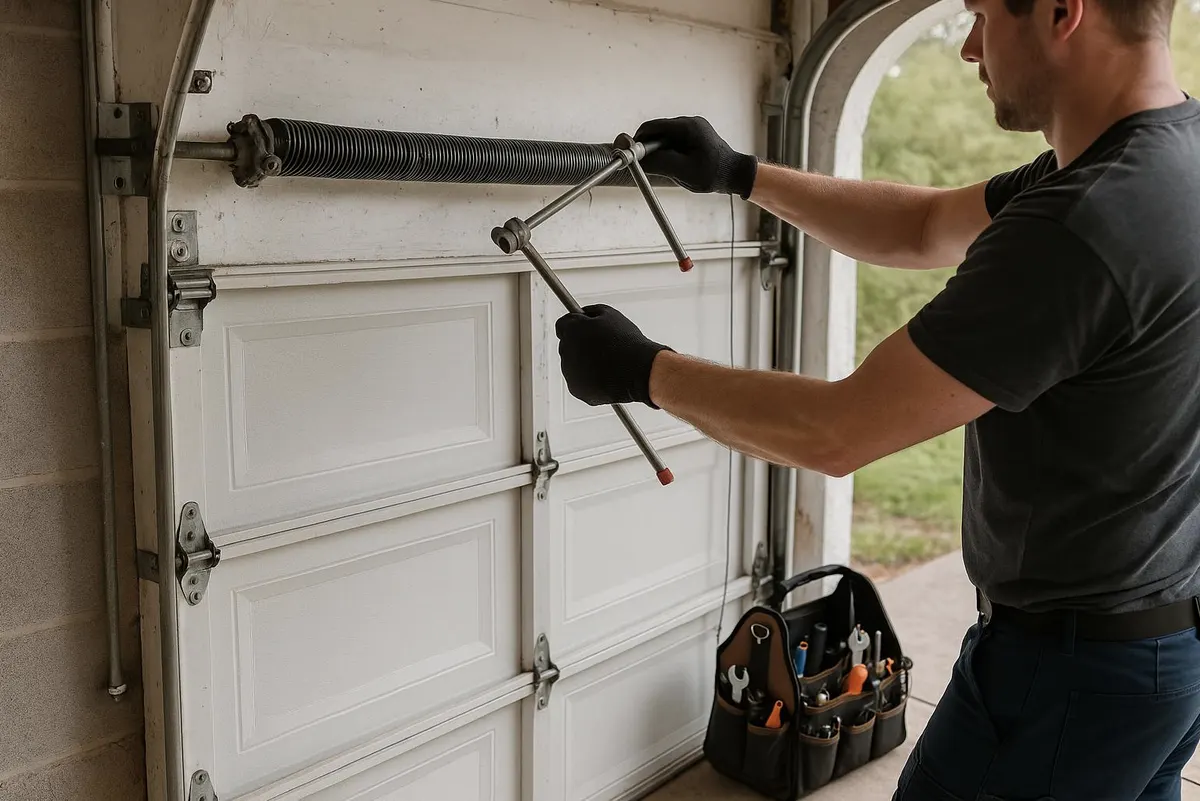
If your door flexes, rattles, or doesn't sit flush when closed, or if you're not sure whether your hardware and tracks are holding up the way they should, it's worth having it looked at before storm season tests it for you. Townsend Garage Door can inspect the tracks, rollers, and panel condition, handle spring replacement if the system is showing wear, and talk through reinforcement or full garage door installation options if your current door isn't built for the wind loads this area sees. We work on doors throughout Townsend, Middletown, Odessa, and the surrounding communities, including older homes where the original door was never designed with today's storm patterns in mind.
Don't wait for the next coastal storm to find out your garage door is the weak point in the house. Call Townsend Garage Door today to schedule an inspection before the weather turns.