
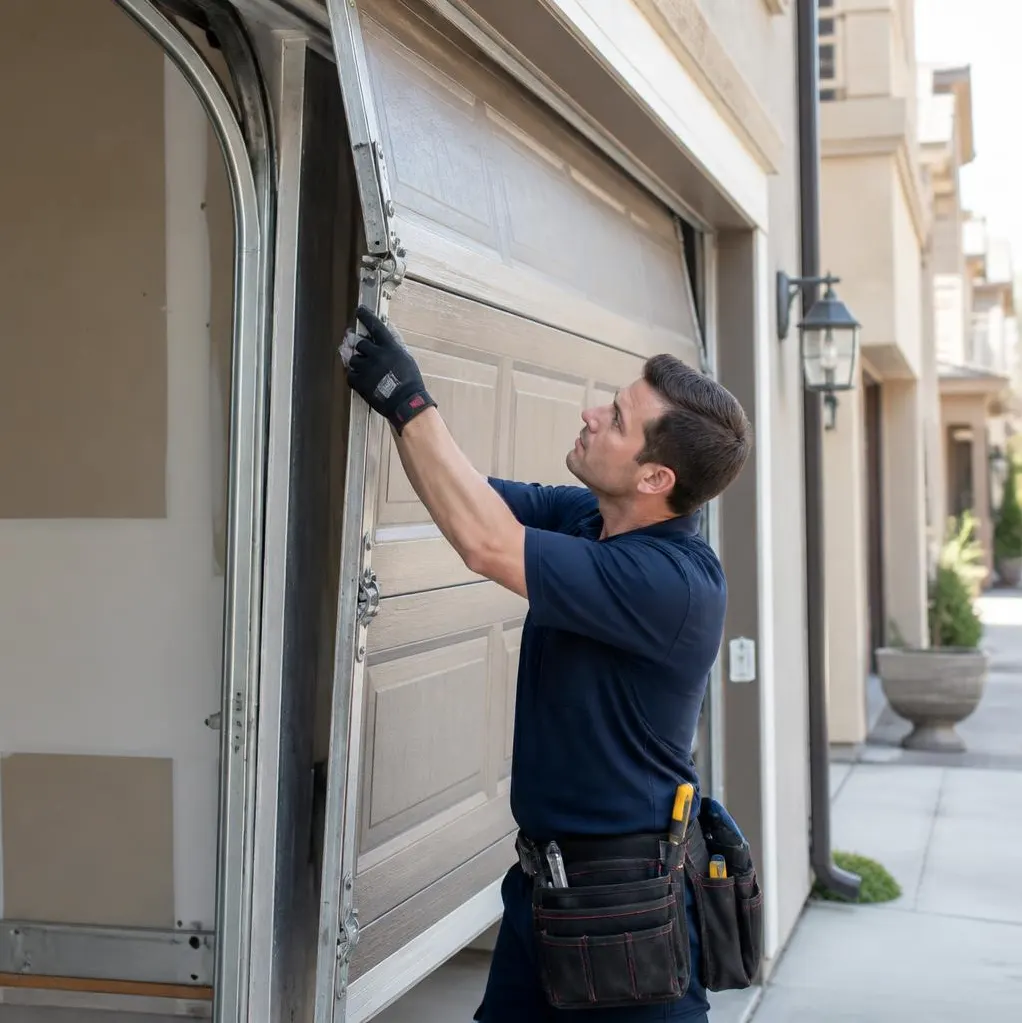
What a Skipped Fall Checkup Actually Costs You
Put this off until January and you're not just risking an inconvenience — you're risking a dead opener motor on the coldest morning of the year, a cracked panel from ice that worked its way into a seam all summer, or a spring that finally gives out when it's loaded with extra resistance from stiff, cold-weather metal. None of those are cheap fixes, and all of them are more likely after a door goes through a Delaware winter unprepared. The time to catch a worn seal or a sluggish sensor is now, while it's still a five-minute fix instead of an emergency call during a cold snap.
Why This Matters More Here Than in Other Climates
Townsend and the surrounding area don't get brutal, sustained cold the way the upper Midwest does, but the combination of humid summers, heavy rain, and icy winters is hard on garage doors in its own way. Moisture gets into wood and steel components during the wet months, then temperatures swing below freezing and that trapped moisture expands, warps seals, and stiffens hardware. Add in a coastal storm or two and a lot of homes in this part of New Castle County — especially older construction — end up with doors that were fine in September and sticking, sagging, or groaning by December.
1. Replace the Weatherstripping Before It Fails
The rubber seal along the bottom of your door and the strips along the sides are your main defense against wind-driven rain and cold air. After a humid summer, check for cracking, flattening, or gaps where you can see daylight. If the seal has lost its flexibility or doesn't sit flush against the floor anymore, replace it now. A compressed or torn seal lets in cold air, moisture, and eventually ice, which can freeze the door to the slab overnight — a problem that's far more common in older homes with uneven garage floors than in newer construction.
2. Lubricate Hardware With the Right Product
Hinges, rollers, and the torsion spring itself all need lubrication before cold weather sets in. Use a silicone-based or garage-door-specific lubricant rather than WD-40, which doesn't hold up well and can attract grit. Pay attention to:
- Rollers and hinges — a light coating prevents the metal-on-metal grinding that gets worse as temperatures drop
- The torsion spring — lubrication reduces friction and metal fatigue, which matters because cold makes steel more brittle and more prone to snapping under tension
- The track — wipe out summer dust and pollen buildup before adding lubricant, since grime mixed with oil just creates more resistance
3. Test the Balance and Auto-Reverse
Disconnect the opener and lift the door manually halfway. It should hold its position on its own. If it drifts down or feels heavy, the spring tension has shifted — a problem that gets worse, not better, once cold weather adds extra resistance. While you're at it, test the auto-reverse safety feature by placing a block of wood in the door's path and closing it. It should stop and reverse immediately. Sensors can drift out of alignment from seasonal temperature changes in the garage, and a misaligned sensor is one of the most common reasons doors stop responding correctly once the weather turns.
4. Check the Opener and Backup Power
Cold weather is tough on garage door opener motors and on the small backup battery many newer units rely on during power outages, which are more common here during coastal storms. If your opener has been sluggish, noisy, or inconsistent, don't wait for it to fail completely in freezing temperatures. Test the backup battery now if your unit has one, since outages paired with a dead battery mean you're stuck manually operating a heavy door in bad weather.
5. Inspect for Rust and Moisture Damage
Heavy rain and humidity over the summer can leave rust starting on hinges, tracks, and the bottom edge of steel doors, especially in older homes where drainage around the garage slab isn't ideal. Rust weakens hardware and can cause a door to bind or stick as metal parts swell slightly. Catching it now with a wire brush and some rust-inhibiting lubricant is far easier than dealing with a seized component in January.
6. Look at Insulation If Your Garage Connects to Living Space
If your garage shares a wall with a bedroom, laundry room, or finished space above it, an uninsulated door means that cold air transfers directly into your home all winter. Insulated doors or add-on insulation kits make a noticeable difference in comfort and can reduce how hard your heating system has to work, particularly relevant given how much temperature swing this area sees between seasons.
When It's Time to Call Townsend Garage Door
Some of this is DIY-friendly — lubrication, visual inspection, weatherstripping swaps. But if your balance test shows real heaviness or drift, if the auto-reverse isn't working, or if you hear grinding that doesn't go away with lubrication, that's your signal to call in a professional before winter, not during it. Our Garage Door Maintenance service covers a full inspection of hardware, hinges, rollers, and opener function, and catches the kind of wear that's easy to miss from the ground. If the balance issue turns out to be a spring under more tension than it should handle, our Spring Replacement service gets that fixed properly before cold weather puts extra strain on worn metal. We work throughout Townsend, Middletown, Odessa, Smyrna, Clayton, Dover, Bear, and New Castle, and we'd rather get you in now for a routine check than get an emergency call in the middle of a freeze.
If your garage door hasn't been looked at since last winter, now's the time. Call Townsend Garage Door to schedule a pre-winter inspection and keep your door — and your home — ready for whatever Delaware's cold season brings.