
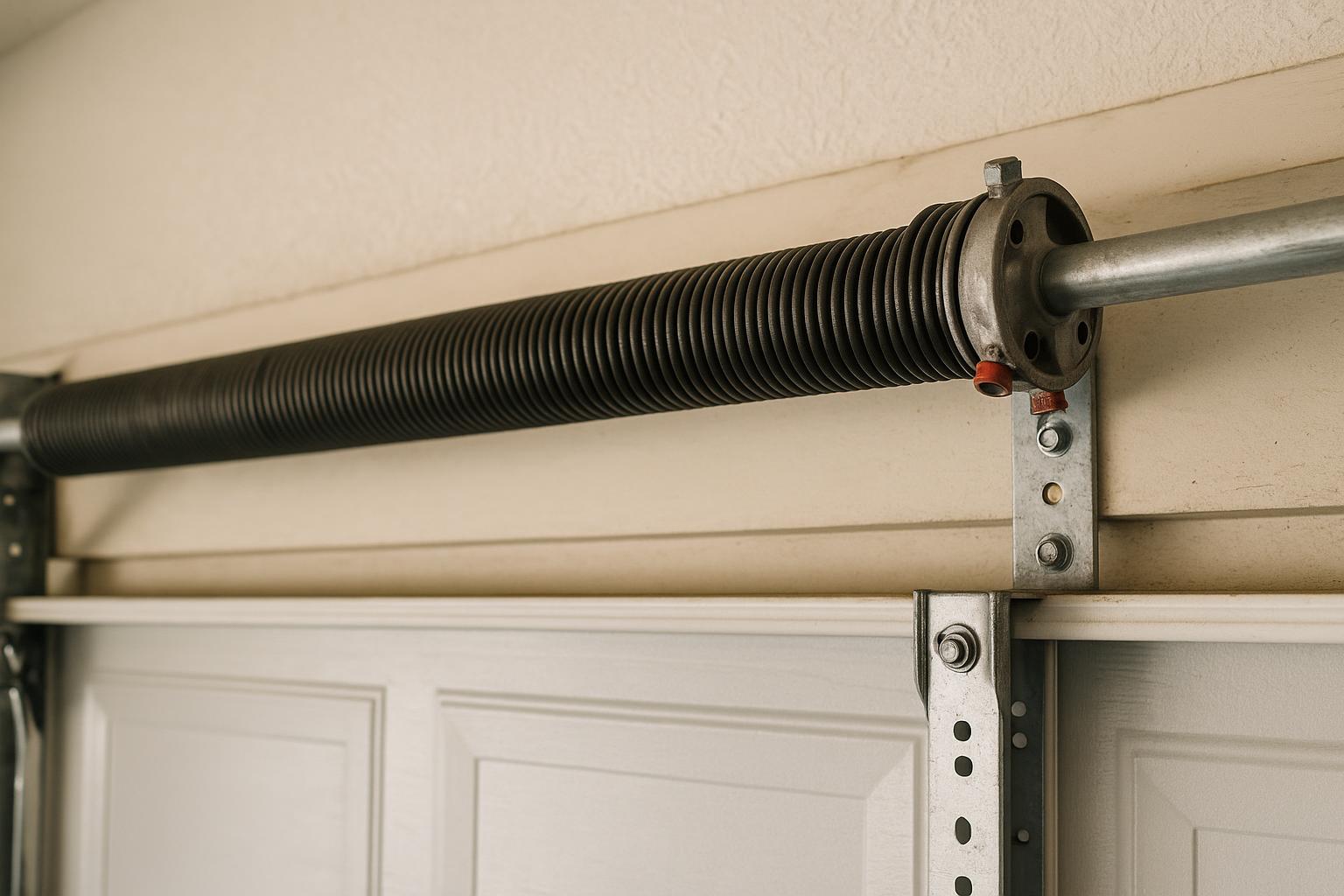
Your Garage Door Springs Are More Important Than You Think
Most homeowners in Townsend don't think much about their garage door springs — until something goes wrong. But those tightly wound coils above your door are doing the heavy lifting every single day. A standard residential garage door can weigh anywhere from 130 to 350 pounds, and your springs are responsible for counterbalancing all of that weight so the door opens and closes smoothly.
When springs start to wear out or break entirely, it's not just an inconvenience. It can be a safety hazard. Understanding the warning signs of failing garage door springs can save you from getting stranded outside your garage on a cold Delaware morning — or worse, dealing with a door that crashes down unexpectedly.
How Garage Door Springs Work
Before we get into the warning signs, it helps to understand the two main types of garage door springs:
- Torsion springs: These are mounted on a metal shaft directly above the garage door opening. They use torque to lift the door and are the most common type found in modern homes around Townsend and Middletown.
- Extension springs: These run along the horizontal tracks on either side of the door. They stretch and contract to provide lifting force. They're more common in older installations.
Both types have a limited lifespan, typically rated for around 10,000 cycles. One cycle equals one full open and one full close. If your household opens the garage door four times a day, that's roughly seven years of use before the springs reach the end of their expected life.
7 Warning Signs Your Garage Door Springs Are Failing
1. The Door Feels Extremely Heavy
Try lifting your garage door manually by pulling the emergency release cord and raising the door by hand. If it feels significantly heavier than usual or you can barely lift it off the ground, your springs have likely lost tension. Healthy springs should make the door feel almost weightless when you lift it manually.
2. The Door Won't Stay Open
A properly balanced garage door should stay in place when you lift it halfway and let go. If it slides back down immediately, that's a clear sign the springs aren't providing enough counterbalance. This is a simple test you can do yourself, and it's one of the most reliable indicators of spring trouble.
3. You Heard a Loud Bang from the Garage
A broken torsion spring releases a tremendous amount of stored energy all at once. Many homeowners describe it as sounding like a gunshot or a car backfiring inside the garage. If you heard a loud bang and your door suddenly won't open, check the springs above the door. A broken spring will have a visible gap in the coil.
4. The Door Opens Unevenly or Crooked
If your garage door tilts to one side as it opens, one of the springs may have broken or lost significantly more tension than the other. This puts extra strain on the opener and the remaining hardware, which can lead to additional damage if not addressed quickly.
5. Visible Wear on the Springs
Take a moment to visually inspect your springs. Look for signs of rust, stretched coils, or gaps in the spring. Rust is particularly common here in Delaware where humidity levels can be high, especially during summer months. Corroded springs lose their elasticity faster and are more prone to sudden failure.
6. Your Opener Is Struggling
When springs weaken, your garage door opener has to work much harder to lift the door. You might notice the motor straining, the door opening more slowly than usual, or the opener stopping partway through the cycle. Continuing to run the opener under these conditions can burn out the motor, turning a spring replacement into a much more expensive repair.
7. The Door Closes Too Fast
A garage door that slams shut instead of lowering gradually is dangerous. This usually means the springs are no longer controlling the descent of the door. If you notice this happening, stop using the door immediately and call a professional.
Why You Should Never Replace Garage Door Springs Yourself
We understand the DIY spirit — plenty of homeowners in Townsend are handy and capable. But garage door spring replacement is one job that genuinely belongs to trained professionals. Here's why:
- Extreme tension: Torsion springs are wound under enormous pressure. A spring that slips during installation can cause serious injury or even death.
- Specialized tools required: Proper spring replacement requires winding bars, clamps, and precise calibration tools that most homeowners don't have.
- Incorrect sizing: Springs must be matched to the exact weight and size of your door. The wrong spring will cause balance issues and premature failure.
Every year, emergency rooms across the country treat thousands of injuries related to DIY garage door spring repairs. It's simply not worth the risk when professional replacement is affordable and can usually be completed in under an hour.
How Long Do Replacement Springs Last?
Standard garage door springs are rated for approximately 10,000 cycles. However, high-cycle springs rated for 25,000 or even 50,000 cycles are available and worth considering if you want to avoid dealing with this issue again for a long time. When we replace springs for our customers in Townsend, Smyrna, and the surrounding areas, we always discuss the options so you can choose what fits your budget and usage.
Regular maintenance also extends the life of your springs. Lubricating them with a silicone-based spray every few months reduces friction and helps prevent rust — a simple step that can add years to their lifespan.
What to Expect When You Call for Spring Replacement
If you've noticed any of the warning signs above, here's what the process typically looks like when you reach out to a local garage door company:
- Assessment: A technician inspects the springs, cables, and overall door balance to confirm the issue and check for any related damage.
- Recommendation: You'll receive an honest recommendation on whether one or both springs should be replaced. We typically recommend replacing both at the same time, even if only one has broken, because the other is likely close behind.
- Replacement: The technician removes the old springs, installs new ones matched to your door's specifications, and carefully adjusts the tension.
- Testing: The door is tested multiple times to ensure smooth, balanced operation. Safety features on the opener are also verified.
The entire process usually takes about 45 minutes to an hour, and you're back to normal operation the same day.
Don't Wait Until You're Stuck
Garage door spring failure is one of the most common repair calls we get from homeowners in Townsend and nearby communities like Middletown, Odessa, and Clayton. The good news is that catching the warning signs early gives you the chance to schedule a repair on your terms rather than dealing with an emergency when you're trying to get to work.
If your garage door is showing any of the symptoms we've described, don't ignore them. A quick inspection from a qualified technician can tell you exactly where your springs stand and what needs to be done. At Townsend Garage Door, we provide straightforward assessments, fair pricing, and same-day service whenever possible. Give us a call and let's make sure your garage door is safe and working the way it should.